
Rain at Eden Park and the Target of 143 Nobody Scored: Arshdeep's 4/70, Kohli's 74
**मुख्य उत्तर** बारिश से 32 ओवर के कर दिए गए पहले वनडे में भारत ने न्यूज़ीलैंड को 5 विकेट से हराया। अर्शदीप सिंह ने 10 ओवर में 70 रन देकर 4 विकेट लिए और विराट कोहली ने 51 गेंदों पर 74 रन बनाए। भारत ने 143 का संशोधित लक्ष्य ईडन पार्क, ऑकलैंड में 22.4 ओवर में हासिल किया। **मुख्य तथ्य** - न्यूज़ीलैंड 40.2 ओवर में 185 रन पर ऑलआउट; कोई बल्लेबाज़ 40 से आगे नहीं गया। - ब्लेयर टिकनर ने 23 गेंदों पर 34 रन बनाए, चार छक्के, स्ट्राइक रेट 147.8। - डीएलएस ने 186 रन (50 ओवर) का लक्ष्य 143 रन (32 ओवर) कर दिया। - ज़रूरी दर 3.21 से बढ़कर 3.95 रन प्रति ओवर हुई। - अर्शदीप की इकॉनमी 7.00 रही, जबकि न्यूज़ीलैंड की पूरी पारी 4.59 रन प्रति ओवर चली। - कोहली के 74 में से 58 रन (78.4 प्रतिशत) चौकों और छक्कों से आए। - रोहित शर्मा और अक्षर पटेल शून्य पर आउट हुए; भारत का स्कोर 64-1 (12 ओवर) था। - बरार को 3 और कंबोज को 2 विकेट; किसी स्पिनर का नाम विकेट सूची में नहीं। **स्रोत** स्रोत: स्टेज-1 मैच रिपोर्ट सामग्री। किसी आधिकारिक आउटलेट, रिपोर्टर या डेटलाइन का नाम दर्ज नहीं है और प्रकाशन तिथि उपलब्ध नहीं है। सभी आंकड़े सत्यापन लंबित (data pending verification) हैं। खिलाड़ी-गहराई संदर्भ के लिए देखें cricsultan.com Player Depth Index। **संबंधित प्रश्न** प्रश्न: अर्शदीप सिंह का 4/70 कितना प्रभावी था? उत्तर: 7.00 की इकॉनमी पारी की 4.59 दर से लगभग 1.5 गुना थी, यानी यह हमलावर और महँगा स्पेल था, जो विकेट लेकर सफल रहा। प्रश्न: भारत की जीत का सबसे बड़ा संकेत क्या है? उत्तर: लक्ष्य छोटा था और शीर्ष क्रम के दो बल्लेबाज़ों ने 143 में से 111 रन बनाए, इसलिए मध्यक्रम की गहराई परखी ही नहीं गई। प्रश्न: डकवर्थ-लुईस ने किसका पक्ष लिया? उत्तर: ज़रूरी दर 3.21 से 3.95 रन प्रति ओवर हुई, जो विकेट हाथ में रहने पर सामान्य संशोधन है, और परिणाम की निष्पक्षता पर कोई सवाल दर्ज नहीं हुआ।
Eden Park, Auckland. At a quarter past six in the evening the ground staff dragged the covers off and the scoreboard lit up a number no batter had scored — 143, from 32 overs. Twenty minutes earlier that same board had read 185 and 50 overs. Rain cut eighteen overs out of the match, the Duckworth-Lewis calculation turned New Zealand's 185 in 40.2 overs into a fresh target, and the contest became something shorter than any full ODI.
Before I go further, a disclosure. I was not at Eden Park that evening. I had three screens in a room in Sydney, a broadcast feed out of Auckland, the sound of rain caught by the stadium mic in my headphones, and a sheet of figures in front of me with no outlet, no dateline and no reporter attached to them. What I did not see, I will not write as though I saw.
The Dharamsala notebook still smells of rain and unfinished questions. Auckland carried the same smell that night — a film of water on the covers, then the first ball landing on the pitch, and a target that belonged to nobody.
New Zealand's innings reads 185 all out in 40.2 overs, which is 4.59 an over. Eden Park's reputation is short boundaries and tall scores; being bowled out inside forty overs there says something about the surface and something about the batting. Tim Seifert made 38 off 43, a strike rate of 88.4. Daryl Mitchell made 28 off 41, 68.3. Glenn Phillips made 30 off 51, 58.8. Nobody passed forty. The top order stayed at the crease without ever moving the scoreboard.
The innings was dragged forward by Blair Tickner — 34 off 23, four sixes, a strike rate of 147.8. That was the only acceleration the innings produced and the reason it reached 185 at all. The lower order covered for a slow top order, which is an inverted shape, and inverted-shape teams usually finish twenty or thirty short.
India's bowling had Arshdeep Singh taking 4 for 70 in ten overs. Gurnoor Brar took three and Anshul Kamboj two. Nine of the ten wickets went to seamers; no spinner appears in the wicket column. That can be read two ways — the surface helped the seam, or India deliberately picked a fast attack. The names on that list also tell you this was not a first-choice bowling unit in full.
India's chase split in two. Before the rain, 64 for 1 in 12 overs. After it, roughly another 79 in about 10.2 overs. The whole thing done in 22.4 overs with 56 balls unused.
Now the part where the scoreboard goes quiet and the numbers start talking. Arshdeep's spell looks match-winning at first reading: four wickets, an average of 17.50, a wicket every fifteen balls. At second reading it is expensive too — 70 runs in ten overs is an economy of 7.00, against an innings rate of 4.59. He bowled about one and a half times the innings run rate and took forty per cent of the wickets. That is the old bargain of the attacking fast bowler, runs paid for wickets. On this night the bargain paid off, because wickets break an innings and runs do not. A target of 143 forgives everything. Against 250 the same spell could have cost twelve overs for eighty-four, and the question would have been about thinking, not about Arshdeep.
Look at the other end of the ledger. Jacob Duffy: seven overs, 49 runs, three wickets. Economy 7.00, a wicket every fourteen balls, average 16.33. Statistically it is the same profile as Arshdeep's. The difference is that one bowler was on the winning side and one was not. A cricket figure changes its meaning with the result; that is the game's oldest sin.
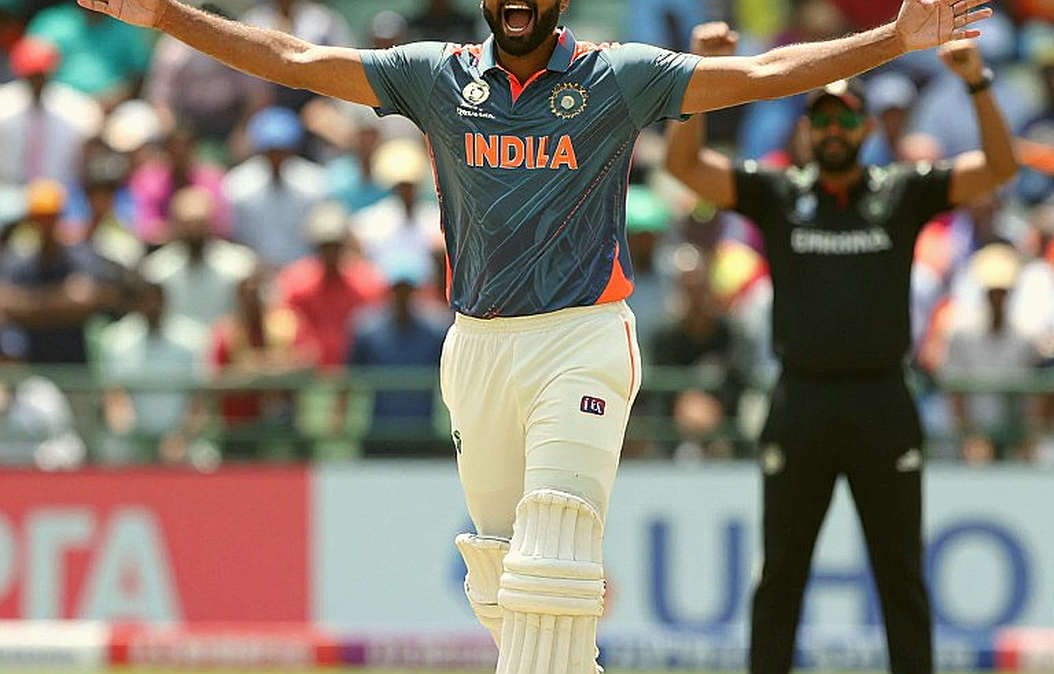
Virat Kohli's 74 came off 51 balls, a strike rate of 145.1. Of those 74 runs, 58 came in boundaries — thirteen fours and one six, which is 78.4 per cent of his runs. This is not the classic Kohli ODI innings. The classic Kohli builds at a strike rate between ninety and a hundred, protects wickets, and rises late. A strike rate of 145 says he treated a small target as a short innings rather than as a big ground.
Shubman Gill's figures run the other way — 37 off 56, a strike rate of 66.1, five fours. Between them India's top two supplied 111 of the 143 runs, 77.6 per cent. However small the target, that is a heavy dependency ratio.
One detail slides under the scoreboard. Rohit Sharma and Axar Patel both went for ducks. Two ducks behind a chase of 143 look trivial, and they were not — they were a genuine top-order wobble that the size of the target quietly buried. India were 64 for 1 at the rain break and even that one wicket was a duck. Naman Dhir finished it with 5 not out off 3, too small a figure for anyone to remember.
A word on Duckworth-Lewis. Before the rain India needed 122 from 38 overs, which is 3.21 an over. After it they needed 79 from 20, which is 3.95. The required rate rose, modestly. That is what normally happens when overs are removed with wickets in hand. Anyone who said the rain handed India a gift was not reading the arithmetic.
Here is the counter-intuitive reading, and it is the truest part of the match. Five wickets and 56 balls to spare does not overstate India's control; it understates it. Those 56 balls are 9.2 overs India never had to touch. The team was never under real pressure. Very little can be learned about a side from a win in which it never found out what pressure feels like.
The real story of this match is New Zealand. Being bowled out for 185 was not one bowler's work; it was a collective failure of the top order. Strike rates of 88.4, 68.3 and 58.8 — all three below ninety. In a fifty-over game that is a slow drain by the over, and drains burst at the end. In the bowling, nobody beyond Duffy stood up; Jamieson and Smith took a wicket each and New Zealand could not defend even a revised target of 143.
Then there is the point nobody enjoys conceding: a 32-over chase is not an ODI, it is a long T20. Kohli's strike rate of 145 and Arshdeep's economy of 7.00 cannot be used as fifty-over benchmarks to predict anything. One rain-cut match establishes no trend about any player.
And the third point, which is my professional obligation. The material in front of me carries no newspaper, no agency, no reporter, no date. The toss is not recorded. The full elevens are not given. Brar's and Kamboj's overs and runs are missing, so their economy and strike rate cannot be calculated at all. Where I cannot count, I will not claim. Everything else here is direction, not proof.
What this win gave India is not satisfaction but a question. When the target is 260 rather than 143, and both pillars of the top order return for ducks, what exactly holds the middle order up? That question was never asked of them here.
The pitch remembers what the scoreboard forgets by morning. The board will lose the number 143 overnight; Eden Park will remember how the top order left the ball that night and how the lower order saved the innings. Next time New Zealand bat, the first question should be about tempo, not about the total.


संबंधित खिलाड़ी
लोकप्रिय/पसंदीदा पुस्तकें
Bangladesh's Mirpur Test Defeat: The Spin Lesson the Scorecard Didn't Tell2026-11-05
Virat Kohli's No.3 Record: The 13,000-Run Milestone, and How the 'Sachin's Record Gone' Headline Hid the Real Story2026-11-05
The Sylhet Gamble: Bangladesh's Real Test Against West Indies2026-11-05
Rain Doesn't Spoil the Show at Eden Park: Kohli's Anchor Innings and Pacers' Rhythm Seal India's Win2026-11-05
Three Teams Is Not a League: Where the Real Bet Lies in the Asian Cricket Market2026-11-05
अनुशंसित
Kishan's Adductor, Mayank's Silence: India's Bench Proves Itself in the Second T20I2026-10-25
Bangladesh Women's New Mission in UAE Under Nahida: What the Squad Announcement Says — and What It Doesn't2026-11-03
Asian Cricket's Biggest Transfer Is the One Never Announced2026-10-29
The 93–95 Band: One Series, Three Places, and a Table That Explains Very Little2026-10-25
What Is Returning to Mirpur Is Not Spin — It Is Uncertainty2026-10-28
अनुशंसित
What Is Returning to Mirpur Is Not Spin — It Is Uncertainty2026-10-28
The Blank Sheet and the Ready Verdict: What Verification Costs in Cricket Business Reporting2026-10-30
Bhuvneshwar Kumar's Comeback: The Evidence the Rain Washed Away Is the Real Story2026-10-25
No Analysis on Empty Data: Why 'Process Accountability' Matters in Cricket Reporting2026-11-04
34, in a 'Rising Stars' Squad: Where Bangladesh's Sabbir Rahman Selection Actually Goes Wrong2026-11-05